
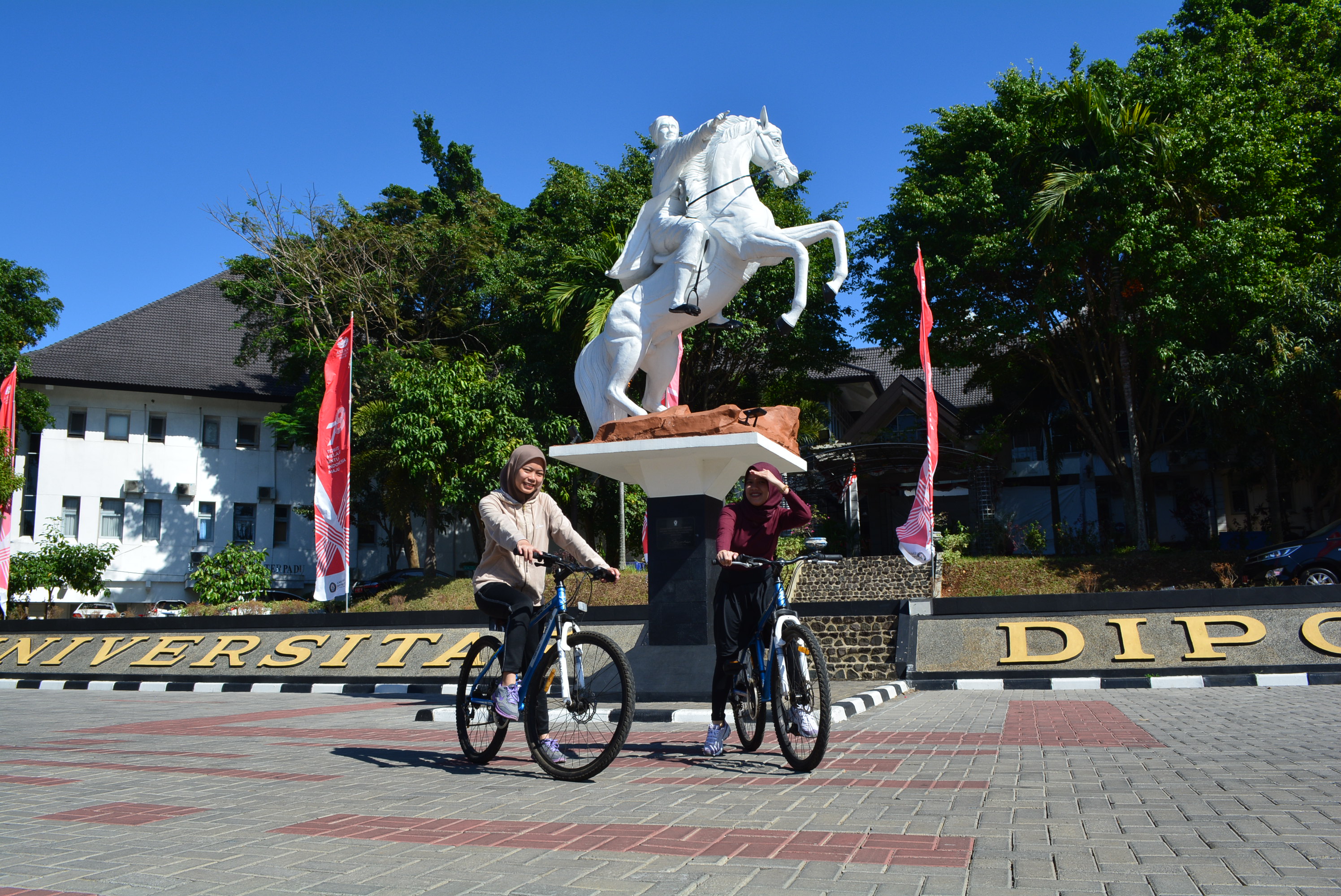
Diponegoro University’s commitment to becoming a sustainable campus is not only conceptual, but is also evident through the low-carbon transportation facilities available to the entire academic community. One such facility is PitKu, or UNDIP Campus Bike, which is managed by the Housekeeping Department and the Directorate of Assets and Design. Located in the SA-MWA Building area, PitKu provides an environmentally friendly transportation option that also supports the community’s movement from one point to another without producing pollution.
As a large university with high student and faculty mobility, the provision of zero-emission vehicles is not simply an added perk. PitKu is part of the campus’s systematic effort to reduce its carbon footprint, expand environmentally friendly mobility, and strengthen UNDIP’s position in sustainable campus rankings. This program aligns with the Zero Emission Vehicle program, which aims to create daily mobility patterns that do not increase emissions and remain accessible to all users.
A Facility Available for the Entire Academic Community
PitKu is inclusive. Every student, lecturer, and educational staff can use it free of charge and without complicated procedures. Users simply come to the SA-MWA security post, leave their student ID card (KTM), and then record their borrowing. This system is designed to ensure fast and efficient bicycle borrowing.
In an internal interview with the Directorate of Assets and Design, the housekeeping manager emphasized that PitKu is not simply a transportation facility, but a means of providing green access that emphasizes the principles of “easy, safe, and environmentally friendly.” PitKu is also positioned as an educational tool that demonstrates the campus’s ability to move without increasing pollution and fossil fuel consumption.
Bike Lanes and Growing Infrastructure
One important support for PitKu is the presence of yellow bike lanes at several points on campus. However, as noted by many students, these lanes do not yet cover all areas of UNDIP. The Faculty of Economics area has fairly clear paths, but the paths to Psychology, RSND, and several campus intersections lack markings and are not fully bicycle-friendly.
The Directorate of Assets and Design not only manages bicycles as assets but also deals with route development strategies, inter-unit coordination, and long-term planning involving spatial planning. A campus bike lane map has been developed, but its implementation is still being refined to ensure that environmentally friendly mobility is fully realized.
Health Dimensions, User Experience, and Educational Value
For some students, cycling on campus is not just a means of transportation, but an experience in itself. Many report experiencing benefits from cycling, from physical fitness to stress relief amidst busy academic activities. PitKu provides an opportunity for students to experience light exercise for free, without having to bring their own bicycles to campus.
However, on the other hand, some students feel that the bike lanes at UNDIP are not yet ideal for daily use, either due to the difficult terrain or the need for improved bicycle conditions. These observations provide important input for the Directorate of Assets and Design in formulating future PitKu development plans.
Towards Facility Renewal and Greener Mobility
As assets age, some PitKu units have reached their full lifespan. Therefore, the Directorate of Assets and Design is currently developing a facility renewal plan to improve services in line with campus needs. Improvements to the bike lanes and the reorganization of bicycle parking areas are part of the development plan.
These updates are expected to strengthen UNDIP’s image as a low-carbon campus while also improving student comfort. PitKu is not just a bicycle, it is a symbol of UNDIP’s transition towards a more sustainable, healthy, and environmentally friendly campus ecosystem.


